Escape the Pile
How Storytelling Can Make Your Resume and Cover Letter Unforgettable
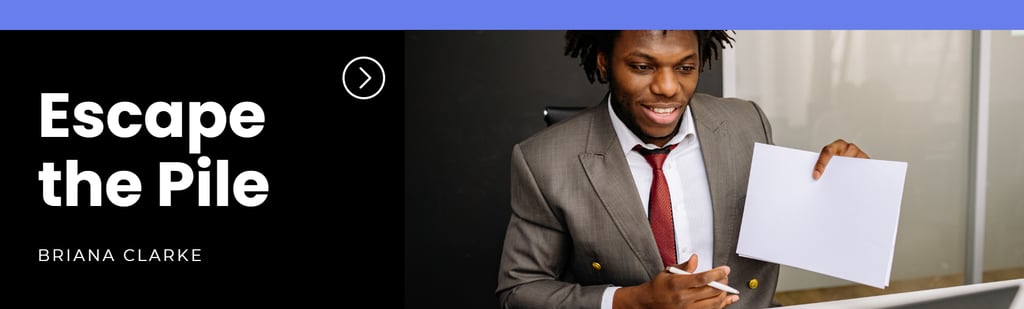

Picture this: a hiring manager sitting at their desk, coffee in hand, eyes glazed over after reviewing resume number 47. Then—bam!—yours lands in their inbox. Within seconds, they’re intrigued. They’re curious. They actually want to keep reading. Congratulations, you’ve just escaped the pile.
That’s the goal. And the secret weapon? Storytelling.
The Pile of Doom: A Talent Manager's Perspective

Introduction
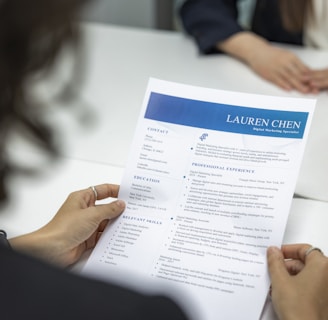
With extensive experience in talent management, I can confirm a harsh reality: after reviewing the 23rd resume, they all start to blur into one indistinct mass if nothing stands out to engage the reader. Without that spark of creativity or connection, even the most qualified candidates risk being relegated to the proverbial "pile of doom." Hiring managers are often inundated with applications, and the ones that fail to engage are quickly forgotten.
This is where the power of storytelling becomes essential. A well-crafted narrative can transform your resume from a list of achievements into a compelling story that captivates the reviewer. It’s not just about listing your duties and responsibilities, but about painting a picture of your professional journey. When your resume tells a story, it becomes more than just another document; it becomes a memorable introduction that makes the hiring manager take notice.
The 30-Second Reality Check
Let’s start with some tough love. Most hiring managers spend 30 to 40 seconds—if that—looking at a resume. That’s less time than it takes to microwave leftovers. With hundreds (sometimes thousands) of applications flooding in, recruiters are skimming, scanning, and sorting faster than you can say “attached please find my resume.”
So how do you stand out in that blink of an eye? You tell a story.
Why Storytelling Works (and Science Agrees)
Our Brains Love Storytelling
Storytelling isn’t just for bedtime or Netflix. It’s one of the oldest and most powerful forms of communication. From cave paintings to TikToks, humans are wired to connect through stories. Neuroscientists call it neural coupling—when someone hears a story, their brain lights up as if they’re experiencing it themselves.
That’s why a resume that reads like a grocery list of duties (“managed projects,” “led meetings,” “attended Zoom calls that could’ve been emails”) doesn’t stick. But a resume that tells a story—one that shows impact, emotion, and growth—creates connection.
When you tell your story well, you’re not just another applicant. You’re a person they want to know more about.
6 Steps to Escape the Pile
Craft Your Personal Narrative — answer who you are, what you do, and how you work, focusing on storytelling and impact.
That last one—how you work—is where your story lives. It’s not just what you’ve done, but how you’ve shown up. Did you lead a team through chaos? Solve a problem no one else could? Turn a setback into a success? That’s your narrative.
For example, instead of saying: “Managed a team to improve customer service response times.”
Try: “Led a cross-functional team to redesign the customer service workflow, implementing new software and training programs that reduced response times by 50%, significantly enhancing customer satisfaction and retention rates.”
See the difference? One tells a story. The other tells a statistic. The best ones do both.


Steps to Escape the Pile
6
Crafting a Winning Narrative
Creating a resume and cover letter that really stand out is more than just listing what you’ve done—it's about telling a story that grabs attention and makes a connection. We’ve talked about how important storytelling is to make sure your application doesn’t get overlooked. But how do you actually tell your story and outshine the competition?
Here are six steps to help you turn your resume and cover letter into engaging stories that not only showcase your skills and experiences but also catch the eye of hiring managers and make you unforgettable.
6 Steps to
Escape the Pile
Make Your Cover Letter a Page-Turner
A great cover letter doesn’t start with “I’m writing to express my interest…” It starts with a hook. Think of it like the opening scene of a movie—something that makes the reader lean in.
Try opening with a moment of conflict or challenge:
For example, "During the busiest season at my previous job, our team faced a sudden 30% increase in workload due to unexpected demand. As the team lead, it was up to me to strategize an effective response."
Now that you've captured their attention, position yourself as the hero:
For example, "By reorganizing our workflow and implementing a new project management tool, I successfully led the team to not only meet deadlines but also exceed our productivity targets by 15%."
That’s storytelling in action. You’ve introduced a problem, shown how you solved it, and demonstrated results. You’ve also revealed your adaptability, leadership, and problem-solving skills—all without saying, “I’m adaptable, a leader, and a problem solver.”
Craft Your Personal Narrative
Speak to Your Audience
3
Every story needs an audience. In this case, it’s the hiring manager—and their trusty sidekick, the Applicant Tracking System (ATS).
An ATS is the software that scans your resume for keywords before a human ever sees it. If your resume doesn’t include the right words, it might never make it to the top of the pile.
Here’s how to beat the bots:
Use keywords from the job description. If the posting says “Adobe Creative Suite,” don’t just say “graphic design tools.” Match their language.
Keep formatting simple. Fancy fonts and graphics can confuse the system. Clean, modern, and readable wins every time.
Tailor your resume. A one-size-fits-all resume screams “lazy.” Customize it for each role or at least each industry.
That’s storytelling in action. You’ve introduced a problem, shown how you solved it, and demonstrated results. You’ve also revealed your adaptability, leadership, and problem-solving skills—all without saying, “I’m adaptable, a leader, and a problem solver.”
4
Show Impact-Not Just Activity
Hiring managers don’t just want to know what you did—they want to know what happened because you did it.
Use metrics wherever possible:
“Increased engagement by 25%”
“Reduced processing time by 40 hours per month”
“Raised $11,000 for charity”
Numbers tell a story of results. They show that your work mattered.
5
Keep it Clean + Professional
A few quick don’ts:
Don’t include your age, birthday, or home address.
Don’t use your old “RedBunny7228@gmail.com” email. Create a professional one.
Don’t include a photo unless it’s standard in your industry (like modeling or design).
And please—white space is your friend. A cluttered resume is like a crowded elevator: no one wants to stay in it for long.
Be Truthful + Authentic
No need to exaggerate or invent. Authenticity is magnetic. Employers can spot fluff a mile away, but they’ll remember honesty and self-awareness.
If you don’t have years of experience, highlight projects, internships, or volunteer work that show transferable skills. Relevance beats quantity every time.
6
The Bottom Line: Escape the Pile
So, tell your story. Make them curious. Make them care. And when they finally reach out for an interview, they won’t just remember your qualifications—they’ll remember you.
Because in a world full of piles, the best stories always rise to the top.
Storytelling transforms your resume and cover letter from static documents into living introductions. It helps you connect, engage, and stand out—even if you’re resume number 48 in the stack.
Contact
Subscribe to our newsletter
info@careercousin.com